Closing a restaurant? Here’s how to sell the equipment without adding another full-time job.
C&C STRAIGHT TALK · FLORIDA BUSINESS ASSETS
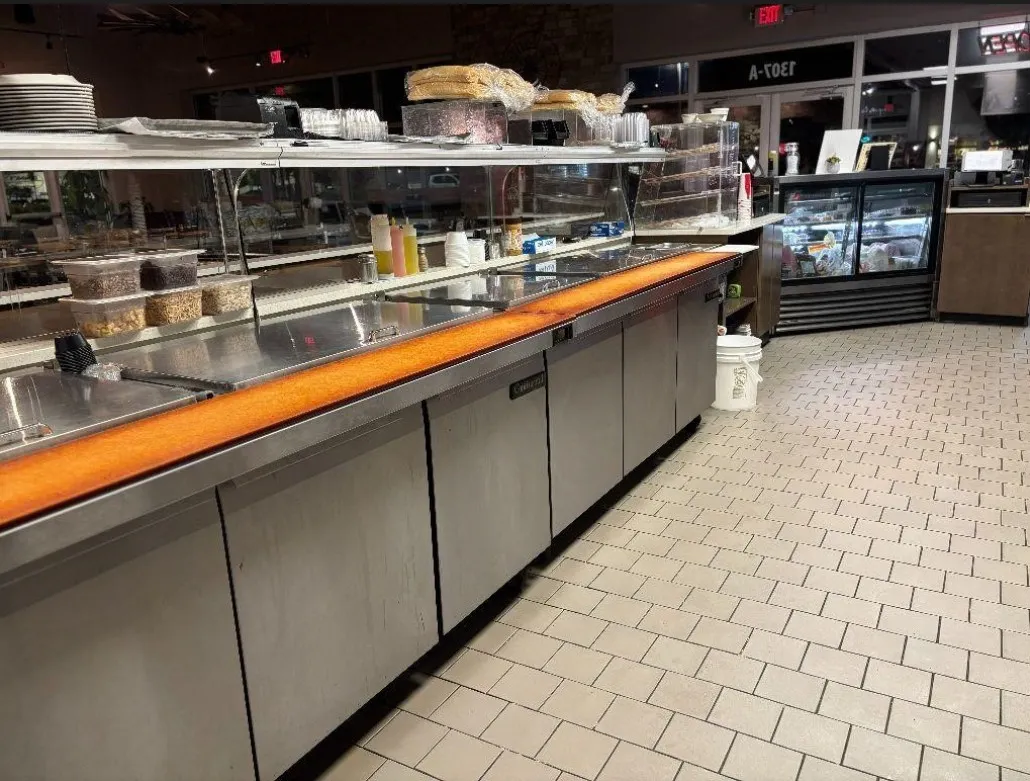
Actual C&C project photograph. Completed Daytona Beach restaurant liquidation.
You can be great at running a restaurant and still have absolutely no desire to become a full-time equipment salesperson. You already ran one business. You don’t need to accidentally open another one in your Facebook inbox.
If you’re closing, moving or changing direction, the equipment is one more thing on an already long list. Here’s where I’d start: figure out what you can actually sell, what has to stay and when the space needs to be clear. Then choose the sale plan. The pretty pictures matter. A plan matters more.
“Is this still available?” Yes. So is my last nerve.
Selling it yourself can sound simple: take a few photos, post a price and wait for a buyer. Then come the messages. The offers nowhere near your asking price. The person who says they’re on the way and never shows. The next person who arrives without a truck, help or any idea how heavy a commercial mixer is.
Not every buyer is difficult, and a direct sale can work. But your time belongs in the calculation. Someone has to answer questions, qualify inquiries, arrange access, discuss payment and coordinate removal. If you’re already closing a business, that someone may not need to be you.
Where C&C comes in: you don’t have to be the whole sales department.
We start with the assets, location and deadline, then discuss the sale approach and what C&C will handle. Depending on the agreed project scope, that can include organizing the assets into lots, preparing descriptions and photos, marketing the sale, managing the bidding process and coordinating buyer communication and checkout.
Instead of trying to juggle every item and every message on your own, you have an agreed process and someone responsible for the parts we’ve taken on. You still provide information, approve the terms and make sure we understand the property restrictions. We’re here to take work off your plate, not hand you a different pile of confusion.
An auction can give the sale a defined closing schedule and bring the assets together in one catalog. That does not mean every lot will sell, every buyer will behave perfectly or the building will empty itself. We discuss fees, responsibilities and what happens after bidding before the project proceeds. Organized is the goal. Magic is not on the invoice.
Start with the deadline. The real one.
“As soon as possible” and “the landlord needs the keys Friday” are very different situations. Tell us the actual deadline, whether the business is still operating and when buyers could get access. There’s no point planning a sale that doesn’t leave time for pickup.
Don’t wait until every photo is perfect to make the first call. A city, an overview of the assets and an honest timeline give us somewhere to start. We’ll discuss what else we need.
Before you list it, make sure it’s yours to sell.
Separate owned equipment from leased items, landlord fixtures and anything supplied by a vendor. If ownership or permission is unclear, get it clarified before it goes in a catalog. A piece of equipment sitting in your kitchen is not, by itself, proof that you can sell it.
“Commercial oven” is a start. A model number is better.
Take an overall photo, a clear shot of the identification plate and photos of the interior and controls. Note what you know about working condition, missing parts and damage. For larger equipment, include measurements and the gas or electrical information shown on the plate.
If you don’t know whether something works, say that. An honest description is more useful than a confident guess. “New condition” also doesn’t automatically mean a manufacturer’s warranty transfers with the item.
The small stuff belongs in the conversation, too.
Everyone notices the oven and walk-in. Don’t skip the stainless tables, shelving, cookware, racks, dining furniture and restaurant smallwares. We need to see the mix before discussing what should be sold individually or grouped together. Not every piece needs its own spotlight.
Retail price is context. It is not a promise.
The price of a comparable new item can help describe what you have. It does not tell you what this particular item will bring at auction or what a buyer will pay today. Model, condition, completeness, demand and removal requirements all matter. Your original invoice is useful information, but it isn’t a guaranteed resale value. I know what it cost you matters. The next buyer is looking at what it’s worth to them now. Both things can be true.
Auction or direct sale? Start with the situation.
An auction gives buyers a bidding process and a closing schedule. A direct sale lets you present an asking price and review purchase requests or offers. Neither format magically fixes a difficult location, an unrealistic deadline or an incomplete description. We discuss the assets and constraints before recommending an approach.
Sold is not the same as out of the building.
A “sold” message does not lift an oven onto a trailer. Someone still has to disconnect, move and load the equipment. Talk through doorways, stairs, loading access, site rules and who is responsible for each step. Gas, electrical and refrigeration work needs appropriate qualified help where required. Don’t assume the winning bidder can simply roll everything out.
Here’s what this looks like in a real C&C project.
At the Dominic’s Deli & Eatery Daytona Beach liquidation, the advertised assets included commercial refrigeration, refrigerated prep stations, cooking equipment, stainless sinks, booths, tables and chairs. Our project gallery and before-and-after video show the range of contents involved. That is an example of the work, not a promise that your project will have the same outcome.
See the Dominic’s Deli project →
Let’s start with what you know.
You don’t need a polished spreadsheet to talk to C&C. Tell us where the assets are, what’s changing and your deadline. We’ll discuss the scope, sale options, fees and removal responsibilities before you decide to move forward.
You handle the next chapter. Let’s talk about how C&C can help handle the assets, without turning your inbox into your next full-time job.